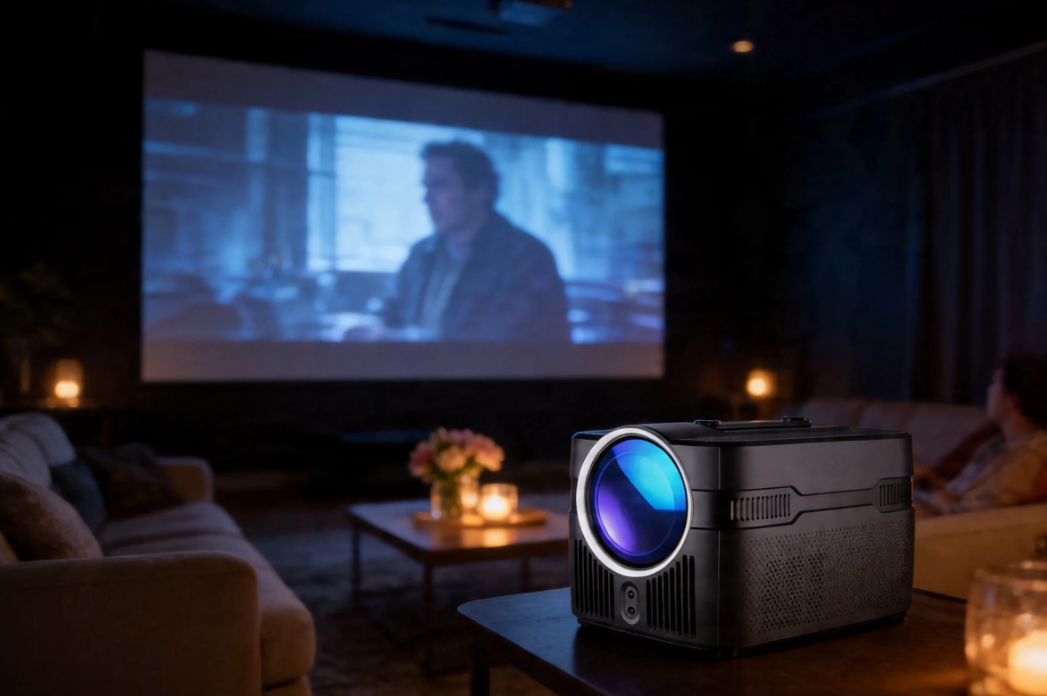

When building a home entertainment setup, many people face a common question: which is more energy-efficient and cost-effective — a projector or a TV?
If you’re searching for:
· projector vs TV electricity cost
· do projectors use a lot of electricity
· TV vs projector power consumption
This article will break it down from multiple angles — power consumption, usage scenarios, electricity costs, and long-term investment — and provide a realistic comparison, including examples like Magcubic projectors.
1. Projector vs TV: Basic Power Consumption Comparison
TV Power Consumption
The power usage of a TV depends largely on its size and panel type:
|
TV Size |
Average Power Consumption |
|
43-inch |
50W – 80W |
|
55-inch |
80W – 120W |
|
65-inch |
100W – 160W |
Key characteristics:
· Consistent power consumption
· High brightness with limited adjustment range
· Still consumes relatively high power even during daytime use

️ Projector Power Consumption
Modern LED projectors (especially portable ones) typically consume less power. For example:
Using the Magcubic L018 as a reference:
|
Mode |
Power Consumption |
|
Energy-Saving Mode |
≈55W |
|
Standard Mode |
≈70W |
|
High-Brightness Mode |
≈85W |
Key characteristics:
· Adjustable power consumption based on environment
· More energy-efficient for nighttime viewing
· Compact size with much larger screen projection (100"+)
2. Electricity Cost Comparison (Real-World Scenario)
Let’s assume a typical usage scenario:
4 hours of viewing per day
Electricity rate: $0.15 / kWh (U.S. average)
Annual Electricity Cost for a TV
Based on 100W power consumption:
· Daily usage: 0.1 kW × 4h = 0.4 kWh
· Annual usage: 146 kWh
· Annual cost: ≈ $21.9
Annual Electricity Cost for a Projector (Magcubic Example)
Based on 70W (standard mode):
· Daily usage: 0.07 kW × 4h = 0.28 kWh
· Annual usage: 102 kWh
· Annual cost: ≈ $15.3
Conclusion:
A projector can save around 30% in electricity costs per year
Using energy-saving mode can further reduce expenses
3. Hidden Costs Most People Overlook
1️⃣ Screen Size vs Energy Efficiency
· TV: Larger size → significantly higher cost
· Projector: Same power → 100–150 inch screen
Lower energy consumption per inch (Projector wins)
2️⃣ Usage Environment
Projectors are more energy-efficient and immersive in dark environments
|
Scenario |
Recommended Device |
|
Bright living room (daytime) |
TV |
|
Nighttime viewing |
Projector |
|
Small spaces |
TV |
|
Immersive large screen |
Projector |
3️⃣ Usage Habits
· TVs are often left on for long periods (background noise)
· Projectors are used more intentionally
In reality:
Projectors are often used less → lower total electricity costs
4. Why More People Are Choosing Projectors
Big Screen Experience + Lower Power Consumption
Compared to TVs, projectors offer more than just energy savings:
· 100"+ immersive viewing experience
· Flexible projection (walls, ceilings, etc.)
· Ideal for camping and portable use
The Trend Led by Brands Like Magcubic
Brands like Magcubic are pushing projectors into a new era of energy efficiency:
· LED light sources replacing traditional lamps
· Multi-mode power-saving design
· Better suited for everyday use
Projectors are no longer a luxury — they’re becoming everyday home device
5. Projector vs TV: Which Is More Energy Efficient?
If you found this article via Google, here’s the quick answer:
Short answer: Projectors are more energy-efficient (especially for nighttime use)
Detailed conclusion:
· Small TVs (≤50”): More stable choice
· Large screens (≥100”): Projectors are more efficient
· Long viewing sessions: Difference is smaller
· Immersion + cost efficiency: Projector wins
Conclusion
In 2026, home entertainment is no longer just about image quality, but also about efficiency.
The real difference between projectors and TVs isn’t just the device — it’s a lifestyle choice.
If you’re looking to create a more flexible, immersive, and energy-efficient viewing experience, a projector is becoming the smarter choice.