
A bedroom projector can turn a small room into a personal cinema, but the best bedroom setup is not simply the one with the highest brightness.
For nighttime viewing, fan noise, appropriate brightness, contrast, viewing distance, and easy setup all affect the experience. A projector that is extremely bright but noisy may be less comfortable in a bedroom than a quieter model with brightness better suited to a dark room.
So, is a projector too bright for a bedroom at night? It can be, especially when the room is completely dark. The goal is to choose enough brightness for your screen size and ambient light without creating an unnecessarily harsh image.
Quick Answer: What Makes a Good Bedroom Projector?
For most bedrooms, prioritize these factors in this order:
1. Low fan noise – important when watching movies in a quiet room.
2. Appropriate brightness – more brightness is not always better at night.
3. Good contrast – helps preserve detail in dark movie scenes.
4. Auto focus – makes setup easier when the projector is moved frequently.
5. Automatic keystone correction – useful when the projector cannot be positioned perfectly straight.
6. Suitable throw distance – especially important in small bedrooms.
A useful rule is:
For bedroom projection, choose brightness based on screen size and room lighting rather than simply choosing the brightest projector available.
1. How Bright Should a Bedroom Projector Be?
Brightness is one of the most misunderstood projector specifications.
A projector's ideal brightness depends on room lighting, screen size, viewing distance, and the type of content you watch.
A small bedroom used primarily at night does not require the same brightness as a living room with windows and ambient light.
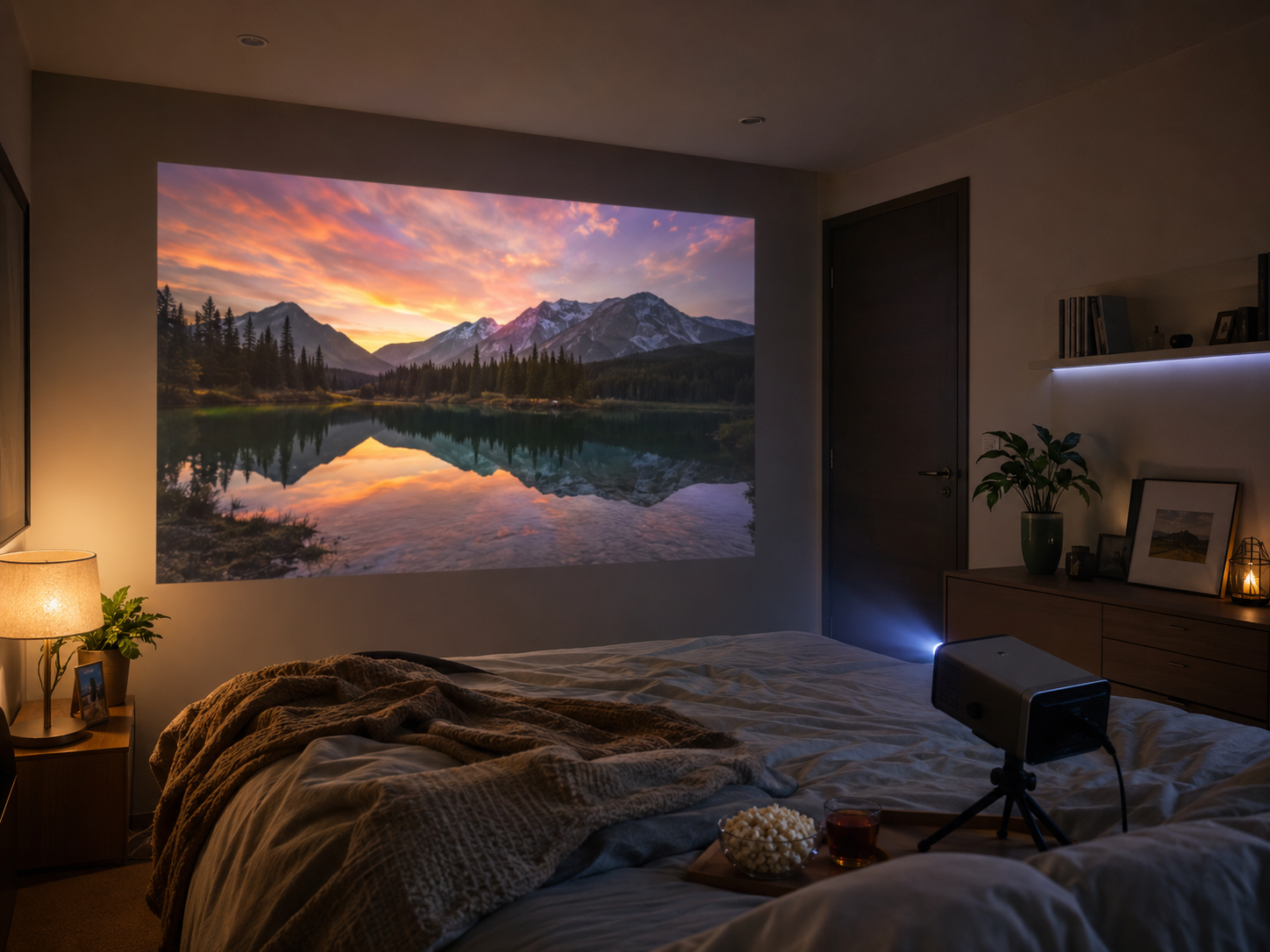
Dark bedroom at night
If your bedroom can be made nearly dark, moderate projector brightness can be sufficient for comfortable movie viewing.
For example, a 60–80-inch image in a dark bedroom generally does not need the same brightness level required for a large 100-inch image in a room with ambient light.
Bedroom with some ambient light
If you frequently watch during the day or have street lights, bedside lamps, or other sources of ambient light, additional brightness becomes more important.
The brighter the surrounding room, the more difficult it is for the projected image to maintain strong contrast.
Larger screen = greater brightness demand
Screen size also matters.
When the same amount of projector light is spread across a larger image, the image appears less bright. Therefore, a projector that looks bright enough at 70 inches may feel less impressive at 100 inches.
This is why brightness should always be evaluated together with screen size and room conditions.
2. Is a Projector Too Bright for a Bedroom at Night?
It can be.In a completely dark bedroom, a very bright image can create a strong contrast between the screen and the surrounding room. Some viewers may find this uncomfortable during long movie sessions.
Instead of maximizing brightness, try to create a balanced viewing environment.
Ways to make nighttime viewing more comfortable
· Reduce projector brightness when the image looks unnecessarily intense.
· Use an appropriate screen size rather than projecting an oversized image.
· Keep a small amount of soft ambient lighting if complete darkness feels uncomfortable.
· Avoid placing the screen extremely close to your normal viewing position.
· Adjust picture mode, brightness, and contrast according to the room.
The ideal setting is not the brightest image possible. It is the image that remains clear, detailed, and comfortable to watch for an extended period.
3. Why Fan Noise Matters More in a Bedroom
Fan noise is easy to overlook when buying a projector.
In a living room, conversations, air conditioning, and other background sounds can mask projector fan noise. A bedroom is usually much quieter, especially at night.
That makes even moderate fan noise more noticeable.
Where should you place a bedroom projector?
If possible, avoid placing the projector immediately beside your head or directly on a bedside table.
Better options include:
· A shelf behind the viewing position
· A ceiling mount
· A rear table or cabinet
· A stable surface positioned away from the bed
The further the projector is from your ears, the less noticeable its operating noise is likely to be.
For bedroom use, quiet operation can be more valuable than maximum brightness.
4. Contrast Matters More Than You Might Expect
Brightness gets most of the attention in projector specifications, but contrast is especially important when watching movies in a dark bedroom.
Many movies contain large amounts of dark content: night scenes, shadows, dark rooms, space scenes, and cinematic black backgrounds.
A projector with good contrast can make these scenes look more defined instead of turning dark areas into a flat gray image.
This creates an important distinction:
More brightness does not automatically mean a better movie experience.
For a dark bedroom, balanced brightness and good contrast can produce a more comfortable and cinematic image than simply selecting the highest-lumen projector.
5. Auto Focus Makes Bedroom Setup Easier
Bedroom projectors are often moved or repositioned.
You might use the projector:
· On a bedside table one night
· On a shelf another night
· Facing a wall
· Facing a projector screen
· From a different position when watching from bed
Manual focus can become inconvenient when the projector needs to be adjusted frequently.
Auto focus can make this process much faster by automatically adjusting image sharpness after the projector is moved.
For a bedroom setup, this is particularly useful when convenience is more important than having a permanently fixed installation.
6. Is Automatic Keystone Correction Useful in a Bedroom?
Yes, especially in small or unconventional rooms.
Ideally, a projector should be positioned as close to perpendicular to the screen as possible. However, bedroom layouts do not always allow perfect placement.
The projector may need to sit:
· Beside the bed
· On a corner table
· On a shelf
· At an angle to the wall
Automatic keystone correction can help compensate for this positioning and quickly restore a rectangular image.
However, correction should be considered a convenience feature, not a replacement for good physical placement.
Whenever possible, position the projector as straight toward the screen as the room allows.
7. Bedroom Projector Buying Priorities
If you are choosing a projector specifically for bedroom use, consider the following priorities:
|
Factor |
Suggested Priority |
Why It Matters |
|
Fan Noise |
30% |
Affects comfort in a quiet bedroom |
|
Brightness |
25% |
Needs to match room lighting and screen size |
|
Contrast |
20% |
Important for movies and dark scenes |
|
Auto Focus |
15% |
Makes repositioning easier |
|
Keystone Correction |
10% |
Helps with flexible placement |
These percentages are not technical specifications. They are a practical way to think about what matters most in a bedroom environment.
For example, if you only watch movies at night in a dark bedroom, you may benefit more from quiet operation and balanced brightness than from choosing the highest advertised brightness.
8. How Far Should You Sit From a Bedroom Projector?
Viewing distance depends on the projected image size and your personal comfort.
A larger screen can create a more immersive experience, but projecting an excessively large image in a small bedroom can make the screen feel overwhelming.
Before choosing a projector, consider:
· Available wall or screen width
· Distance between the projector and wall
· Distance between the bed and screen
· Desired screen size
· Projector throw ratio
If the projector will be placed close to the wall, check its throw distance before purchasing.
For small bedrooms, a compact projector with flexible placement can be easier to integrate than a traditional long-throw setup.
9. How to Create a More Comfortable Bedroom Cinema
A good bedroom projector setup is about more than the projector itself.
Step 1: Control the room lighting
Close curtains or blinds when possible. Reduce direct light hitting the projection surface.
Step 2: Choose a realistic screen size
Do not automatically project the largest image possible. Choose a size that feels immersive without dominating the entire room.
Step 3: Position the projector properly
Keep the projector stable and as close to perpendicular to the screen as practical.
Step 4: Reduce unnecessary brightness
If the image feels too intense in a completely dark room, reduce the picture brightness instead of changing the entire setup.
Step 5: Keep the projector away from your ears
A shelf, rear table, or ceiling position can help reduce the perceived impact of fan noise.
Step 6: Fine-tune the image
Adjust brightness, contrast, color, and picture mode according to your room rather than relying exclusively on factory settings.
10. What Should You Look for in a Bedroom Projector?
The best bedroom projector depends on how and when you use it.
For nighttime movie watching
Prioritize:
Quiet operation
· Balanced brightness
· Good contrast
· Easy focus
· Comfortable screen size
For daytime bedroom use
Prioritize:
· Higher brightness
· Better resistance to ambient light
· Strong contrast
· Flexible placement
For small bedrooms
Prioritize:
· Compact design
· Flexible throw distance
· Auto focus
· Keystone correction
· Easy setup
For occasional movie nights
Prioritize:
· Portability
· Simple setup
· Built-in smart features
· Easy repositioning
11. What About a Budget Bedroom Projector?
You do not necessarily need an expensive home theater projector to create a good bedroom cinema.
For a budget setup, focus on the features that directly affect your actual environment rather than paying for specifications you will rarely use.
For example, if you mainly watch movies at night in a dark bedroom, extremely high brightness may provide less practical value than:
· Quiet operation
· Native resolution appropriate for your screen size
· Good contrast
· Auto focus
· Keystone correction
· Convenient streaming and connectivity
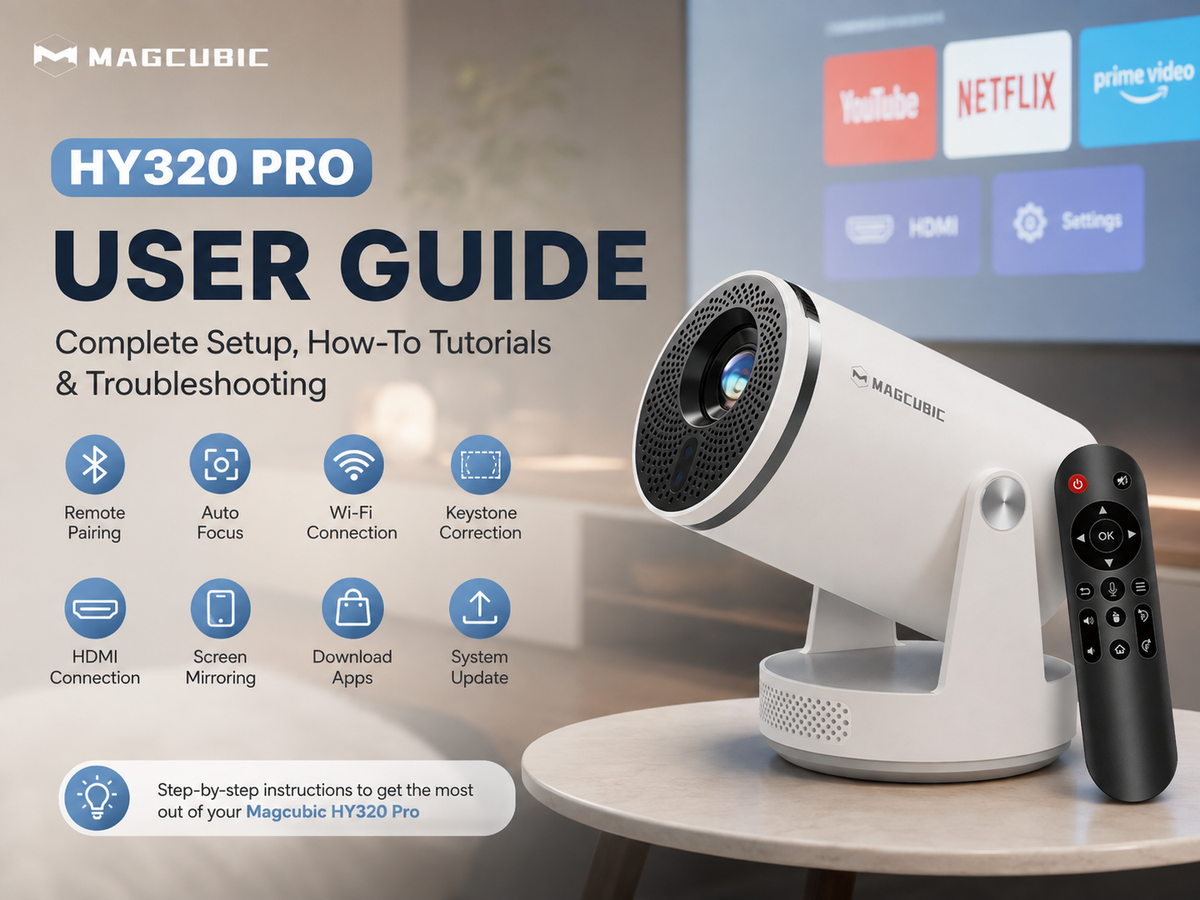
A compact smart projector such as the Magcubic HY320 Pro can be considered for this type of flexible bedroom setup, particularly when the priority is an easy-to-move projector for personal movie nights.
The right choice ultimately depends on your room size, viewing habits, and desired screen size.
Bedroom Projector FAQ
What brightness is best for a bedroom projector?
There is no single brightness level that works for every bedroom. A dark room with a smaller screen needs less brightness than a large screen used in a room with ambient light. Consider brightness together with screen size and room lighting.
Is a bigger projector screen better for a bedroom?
Not always. A larger screen provides greater immersion, but it also requires more projector light and sufficient viewing distance. Choose a screen size that fits both your bedroom and your normal seating or sleeping position.
Do I need auto focus for a bedroom projector?
Auto focus is not essential, but it is highly convenient if you frequently move or reposition the projector. It can reduce the amount of manual adjustment required after changing the projector's position.
Is automatic keystone correction useful for bedroom projection?
Yes. Bedroom furniture and limited space can make perfect projector placement difficult. Automatic keystone correction can help quickly correct an angled image, although physically positioning the projector correctly remains preferable.
Final Takeaway
The best bedroom projector is not necessarily the brightest projector.
For nighttime bedroom viewing, a better balance is usually quiet operation + appropriate brightness + good contrast + easy focusing + flexible placement.
If your bedroom is dark, avoid choosing a projector based solely on maximum brightness. Instead, consider how large you want the image to be, how far you will sit from it, how much ambient light enters the room, and how sensitive you are to fan noise.
For more room-specific recommendations, explore our room-by-room projector setup guide to compare projector placement, screen size, brightness, and setup considerations across different spaces.