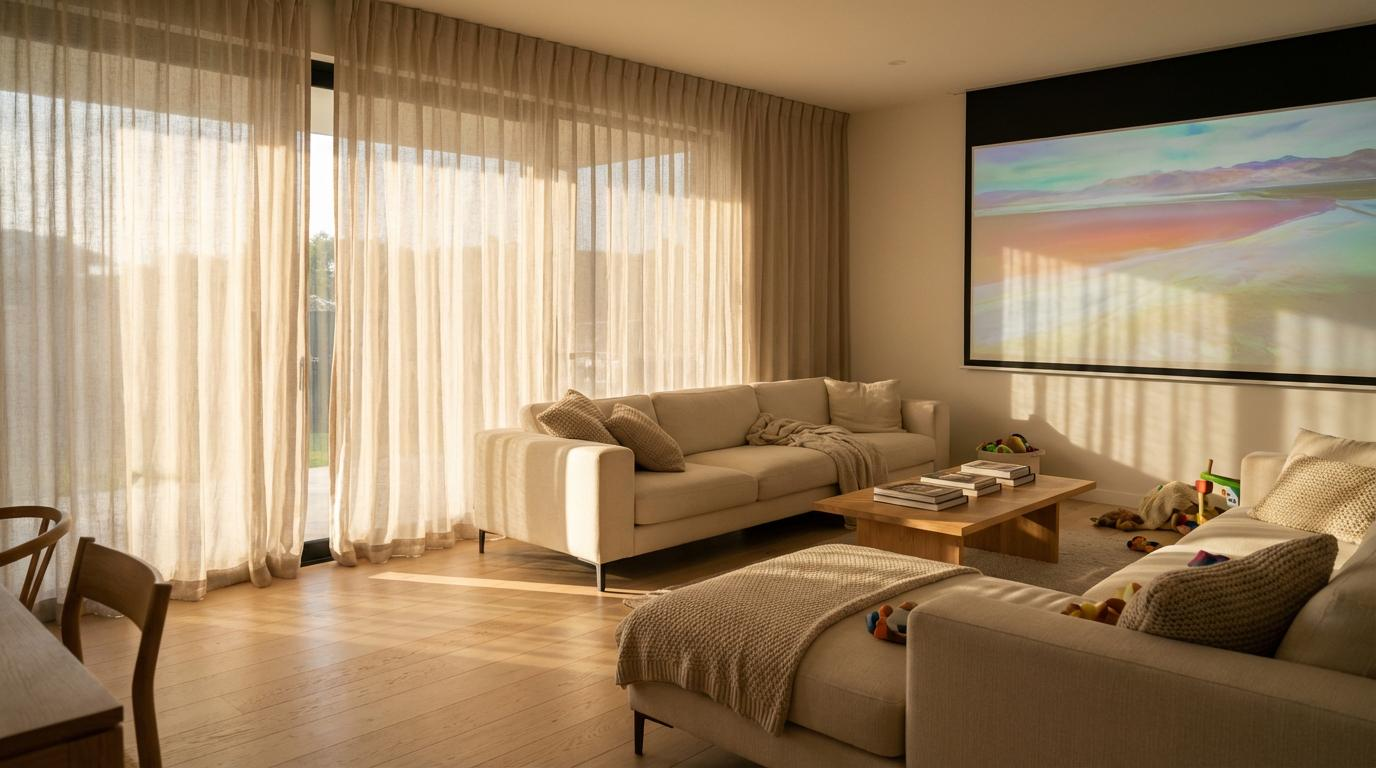

Projector vs TV: Which is better for movies?
The answer depends on your priorities. A TV is usually better for everyday viewing with higher brightness and easier setup, while a projector is better for creating a cinematic movie experience with a much larger screen at a lower cost per inch.
For movie lovers who want a 100-inch+ home theater experience, flexible placement, and immersive viewing, a projector can offer a more cinema-like experience than a traditional TV. For users who prioritize maximum brightness, instant setup, and daily TV watching, a television may be the better choice.
This guide compares projectors and TVs based on screen size, image quality, brightness, cost, installation, gaming, and real-world usage scenarios.
Projector vs TV: Quick Answer
Which is better for movies?
A projector is generally better for movies because it creates a larger, more immersive viewing experience similar to a cinema.
A projector can easily create a 100–150 inch screen, while most home TVs are commonly between 55 and 85 inches. A larger image increases immersion, especially for:
· Movie nights
· Sports events
· Home theaters
· Gaming sessions
· Outdoor entertainment
However, TVs still have advantages in:
· Bright daytime rooms
· HDR performance
· Plug-and-play convenience
· Long-term everyday use
Quick Comparison
|
Category |
Winner |
|
Movie immersion |
✅ Projector |
|
Large screen size |
✅ Projector |
|
Bright rooms |
✅ TV |
|
Easy installation |
✅ TV |
|
Cost per inch |
✅ Projector |
|
HDR brightness |
✅ TV |
|
Portable entertainment |
✅ Projector |
|
Gaming response time |
Slight advantage TV |
|
Cinema-like experience |
✅ Projector |
Bottom line: Choose a projector if you want a big-screen movie experience. Choose a TV if you want an all-purpose display for everyday use.
1. Screen Size: Projector Offers a True Cinema Experience
The biggest advantage of a projector is screen size.
A TV requires purchasing a larger physical display, but projectors can create a huge image simply by adjusting the projection distance.
Typical home entertainment sizes:
|
Device |
Common Screen Size |
|
Small TV |
43–55 inches |
|
Large TV |
65–85 inches |
|
Premium TV |
85–100 inches |
|
Home projector |
80–150+ inches |
For example:
· A 65-inch TV provides a comfortable viewing experience.
· A projector displaying a 100-inch image creates over two times more screen area than a 65-inch TV.
This larger image can make movies feel more immersive because the viewer's field of vision is more fully occupied.
2. Projector vs TV Image Quality: Which Looks Better?
Image quality depends on several factors:
· Resolution
· Brightness
· Contrast
· Color accuracy
· Viewing environment
TV Advantages
Modern TVs usually have:
· Higher peak brightness
· Better HDR performance
· Strong contrast in daylight
· Consistent image quality
OLED and Mini LED TVs especially perform extremely well in bright rooms.
Projector Advantages
Modern smart projectors have improved significantly with:
· Native 1080P and 4K support
· LED light sources
· Advanced image processing
· Automatic keystone correction
· Large-format viewing
For example, a projector with native 1080P resolution and 200+ ANSI lumens can provide a comfortable movie experience in controlled lighting environments such as:
· Bedrooms
· Living rooms with curtains closed
· Dedicated home theaters
The key difference is:
TVs focus on maximum image performance, while projectors focus on maximum cinematic scale.
3. Brightness Comparison: TV vs Projector
Brightness is one of the most misunderstood differences between projectors and TVs.TV brightness is measured in nits, while projector brightness is usually measured in ANSI lumens.
Approximate comparison:
|
Device |
Brightness Level |
|
Smartphone |
500–1,000+ nits |
|
Modern TV |
500–2,000+ nits |
|
Entry projector |
100–300 ANSI lumens |
|
Home projector |
300–1,500+ ANSI lumens |
A TV produces light directly toward your eyes, while a projector reflects light from a screen or wall.
Therefore:
· TVs perform better in bright rooms.
· Projectors perform best in darker environments.
For movie watching at night, a projector can still create an impressive cinematic image.
4. Cost Comparison: Bigger Screen for Less Money
One of the biggest advantages of projectors is cost efficiency.
Example:
75-inch TV
Approximate price range:$600–$2,000+
100-inch projector setup
Includes:
· Projector
· Projection screen or wall setup
Approximate price range:$200–$1,000+
For users who want a 100-inch movie screen, a projector often provides a much lower cost per inch.
Projector vs TV: Full Comparison Table
|
Feature |
Projector |
TV |
|
Screen Size |
80–150+ inches |
43–100 inches |
|
Movie Experience |
⭐⭐⭐⭐⭐ |
⭐⭐⭐⭐ |
|
Bright Room Performance |
⭐⭐⭐ |
⭐⭐⭐⭐⭐ |
|
Installation |
Requires setup |
Easy |
|
Portability |
Excellent |
Poor |
|
Cost per Inch |
Lower |
Higher |
|
Image Brightness |
Depends on room |
Excellent |
|
Gaming |
Good |
Excellent |
|
Space Saving |
Excellent |
Requires wall space |
|
Outdoor Use |
Excellent |
Limited |
5. Best Choice Based on Your Usage
Choose a Projector If You:
Want a Home Theater Experience
A projector creates a movie theater feeling with:
· Large images
· Comfortable viewing distance
· Immersive entertainment
Ideal for:
· Netflix movie nights
· Family entertainment
· Sports watching
· Gaming parties
Live in a Small Apartment
A projector is often a better option when wall space is limited.
Instead of permanently installing a large TV:
· Place the projector on a shelf
· Use a blank wall
· Store it when not needed
Compact projectors are especially suitable for:
· Bedrooms
· Dorm rooms
· Apartments
· Rental homes
Want Portable Entertainment
Many smart projectors include:
· WiFi connectivity
· Bluetooth speakers
· Android systems
· Streaming support
They can easily move between:
· Bedroom
· Living room
· Backyard
· Camping trips
Choose a TV If You:
Watch Content Mainly During the Day
A TV is better when:
· The room has strong sunlight
· Curtains cannot block light
· You need maximum brightness
Need a Simple Daily Entertainment Device
TVs are better for:
· News
· Cable channels
· Daily background viewing
· Family rooms
They require almost no setup.
Projector vs TV: Which Is Better for a Bedroom?
For bedrooms, projectors are often a great choice.
Advantages:
· Large screen without taking wall space
· Comfortable viewing from bed
· Portable design
· Creates a relaxing movie atmosphere
A compact projector can turn a bedroom wall into a personal cinema.
Recommended setup:
· Screen size: 80–120 inches
· Viewing distance: 8–12 feet
· Use at night or with reduced lighting
Projector vs TV: Which Is Better for Gaming?
The answer depends on the type of gaming.
TV Advantages:
· Lower input lag
· Higher refresh rates
· Better HDR brightness
Best for:
· Competitive gaming
· FPS games
· Console esports
Projector Advantages:
· Bigger gaming experience
· More immersive racing and adventure games
Best for:
· Casual gaming
· Party games
· Story-driven games
Final Verdict: Projector vs TV, Which Is Better?
For most movie lovers:
A projector is the better choice for creating an immersive home cinema experience because it delivers a much larger screen size at a lower cost.
A TV remains the better option for users who need:
· Maximum brightness
· Everyday convenience
· High-end HDR performance
The best choice depends on your lifestyle:
|
Your Priority |
Best Choice |
|
Movie nights |
Projector |
|
100-inch screen |
Projector |
|
Small bedroom |
Projector |
|
Outdoor entertainment |
Projector |
|
Bright living room |
TV |
|
Daily watching |
TV |
|
Competitive gaming |
TV |
For people who value big-screen entertainment, flexibility, and affordable home cinema, a smart projector can be one of the most practical upgrades for modern home entertainment.
FAQ
Is a projector better than a TV for movies?
Yes, projectors are often better for movies because they provide a much larger image size and a more immersive cinema-like experience. TVs usually provide better brightness and HDR performance.
Is a 100-inch projector better than an 85-inch TV?
For movie watching, many users prefer a 100-inch projector because the larger screen creates a more immersive experience. However, an 85-inch TV will usually look brighter in daylight.
Do projectors work well in living rooms?
Yes. Modern projectors can work well in living rooms, especially when used with curtains closed or controlled lighting. Higher brightness projectors perform better in rooms with ambient light.
Are projectors cheaper than TVs?
For large screen sizes, projectors are usually more affordable. A projector can create a 100-inch image at a lower cost compared with purchasing a 100-inch television.
Can a projector replace a TV?
Yes, many smart projectors can replace TVs for movie watching, streaming, gaming, and casual entertainment. However, TVs may still be better for bright rooms and constant daily use.
What size screen is best for a home projector?
Most home users choose:
· 80–100 inches for bedrooms
· 100–120 inches for living rooms
· 120+ inches for dedicated home theaters
Are projectors good for Netflix and streaming?
Yes. Smart projectors with streaming support can provide access to popular entertainment platforms. External streaming devices such as TV sticks can also be connected through HDMI.