
How Many ANSI Lumens Do I Need for a Projector?
Quick Answer: The Right ANSI Lumens Depends on Your Room, Not Just the Number
The ideal projector brightness depends on:
· Room lighting conditions
· Projection size
· Viewing distance
· Usage scenario
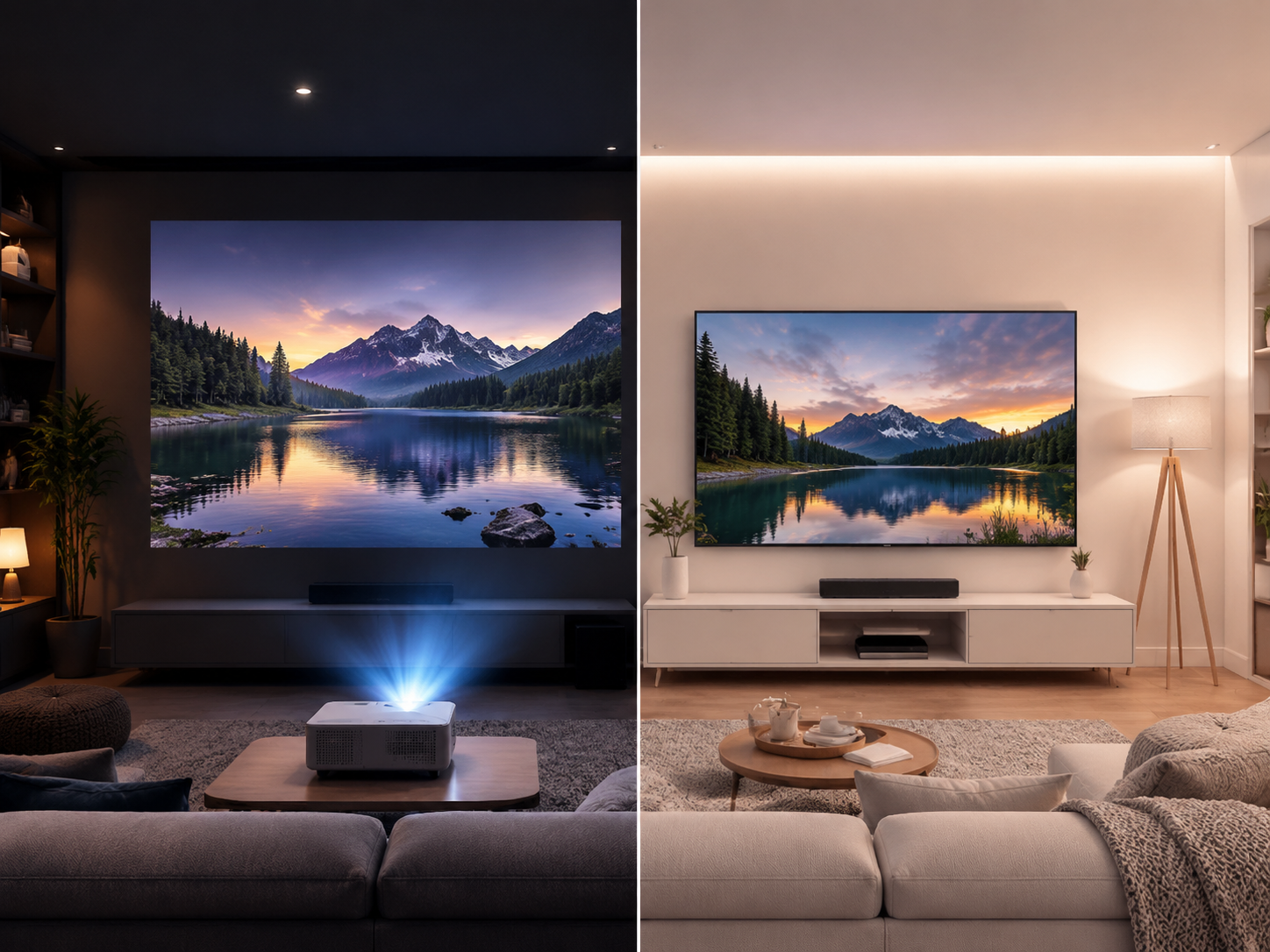
A higher ANSI lumens rating does not always mean a better viewing experience. The same projector can look dramatically different depending on the environment.
For example:
· A 200 ANSI lumens projector can provide a clear and enjoyable viewing experience in a dark bedroom or controlled lighting environment.
· A 500–1000 ANSI lumens projector is better suited for larger screens and rooms with some ambient light.
· A 1000+ ANSI lumens projector is recommended for brighter living rooms or outdoor viewing.
The key is matching projector brightness with your actual usage environment.
What Are ANSI Lumens?
ANSI lumens are the standardized measurement used to describe projector brightness.
Unlike generic “lumens” or marketing brightness numbers, ANSI lumens are measured according to a standardized testing method defined by the American National Standards Institute (ANSI).
In simple terms:ANSI lumens measure how much light a projector produces on the screen.
Higher ANSI lumens generally means:
· A brighter image
· Better visibility in ambient light
· Larger screen capability
However, brightness must always be considered together with:
· Room lighting
· Screen size
· Contrast performance
· Color accuracy
A projector with lower ANSI lumens can still produce excellent image quality when used in the right environment.
How Many ANSI Lumens Do You Need?
There is no universal brightness requirement for every projector.The recommended ANSI lumens range depends mainly on your room conditions.
Projector Brightness Guide
|
ANSI Lumens |
Recommended Environment |
Best Usage |
|
100–300 ANSI lumens |
Dark rooms |
Bedroom movies, personal entertainment |
|
300–800 ANSI lumens |
Low ambient light |
Small home theater |
|
800–1500 ANSI lumens |
Living rooms |
Daily entertainment, gaming |
|
1500–2500 ANSI lumens |
Bright rooms/outdoor |
Large screens, daytime viewing |
|
2500+ ANSI lumens |
Professional environments |
Business presentations |
Is 200 ANSI Lumens Enough for a Projector?
Yes, 200 ANSI lumens can be enough for specific viewing environments.A 200 ANSI lumens projector is designed for users who prioritize:
· Portability
· Compact size
· Bedroom entertainment
· Nighttime movie watching
· Casual streaming
The performance depends heavily on ambient light.In a dark room, a 200 ANSI lumens projector can produce:
✓ Clear images
✓ Comfortable brightness
✓ Accurate colors
✓ Enjoyable movie viewing experience
However, in direct daylight or brightly lit rooms, the same projector will appear less vivid because surrounding light reduces perceived contrast.
Real-World Test: 200 ANSI Lumens Performance Under Different Lighting Conditions
Projector brightness is not only about the ANSI lumens number. The viewing environment plays a major role.
The following test shows how a 200 ANSI projector performs under three different lighting conditions.
200 ANSI Lumens — Curtains Closed
Dark Room Environment
When curtains are closed and external light is minimized:
· Image appears clear
· Colors remain accurate
· Contrast is improved
This is the ideal environment for a 200 ANSI lumens projector.Recommended for:
· Bedroom movie nights
· Nighttime streaming
· Small personal home theaters
200 ANSI Lumens — Curtains Half Open
Moderate Ambient Light
With some daylight entering the room:
· The image remains watchable
· Brightness appears slightly reduced
· Dark scenes may lose some detail
The projector can still work well for casual viewing when direct sunlight is limited.Recommended for:
· Morning or evening entertainment
· Casual TV replacement
· Indoor family viewing
200 ANSI Lumens — Curtains Fully Open
Strong Daylight Environment
Under direct daylight:
· Image visibility decreases
· Contrast becomes weaker
· Colors appear less vibrant
This is a common limitation for all projectors with lower brightness.
For bright rooms, choosing a higher ANSI lumens projector or reducing ambient light is recommended.

Choosing ANSI Lumens Based on Usage Scenario
Bedroom Projector
Recommended:200–800 ANSI lumens
Bedrooms usually have better lighting control, making lower brightness projectors a practical choice.
Best for:
· Movies before sleep
· Streaming shows
· Casual gaming
Living Room Projector
Recommended:800–1500 ANSI lumens
Living rooms usually have more ambient light from windows and lamps.A brighter projector helps maintain:
· Better image visibility
· Stronger colors
· Improved viewing comfort
Outdoor Projector
Recommended:1500+ ANSI lumens
Outdoor environments require more brightness because light conditions are difficult to control.
For nighttime outdoor movies, higher brightness provides better results.
Common Mistakes When Choosing Projector Brightness
Mistake 1: Assuming Higher ANSI Lumens Always Means Better
More brightness is not always better.
A very bright projector in a dark room may create:
· Eye fatigue
· Reduced perceived contrast
· Less cinematic viewing
Brightness should match your environment.
Mistake 2: Confusing Lumens With ANSI Lumens
Many projector listings use different brightness measurements.
Always check whether brightness is measured in:
✓ ANSI Lumens
✗ Marketing Lumens
✗ LED Lumens only
ANSI lumens provide a more reliable comparison.
Mistake 3: Ignoring Room Lighting
A 200 ANSI lumens projector in a dark bedroom may look better than a brighter projector used in uncontrolled lighting.
Always consider:
· Where you watch
· When you watch
· How much light enters the room
Final Recommendation: Choose Brightness Based on Your Environment
The best projector brightness is not the highest ANSI lumens number.It is the brightness level that matches your space.
A 200 ANSI lumens projector can deliver an enjoyable large-screen experience in dark rooms, while brighter projectors are better suited for larger spaces and stronger ambient light.
Before choosing a projector, consider:
✔ Room brightness
✔ Screen size
✔ Viewing habits
✔ Projection distance
When ANSI lumens match your environment, even a compact projector can create an immersive big-screen experience.
FAQ
How many ANSI lumens do I need for a home projector?
For most users:
· 200–500 ANSI lumens: Dark bedrooms and personal entertainment
· 500–1000 ANSI lumens: Small home theaters and low-light rooms
· 1000+ ANSI lumens: Living rooms and brighter environments
Is 200 ANSI lumens enough for a projector?
Yes, if you use it in the right environment.A 200 ANSI lumens projector is suitable for:
· Dark bedrooms
· Nighttime movies
· Small projection spaces
For bright rooms or daytime viewing, a higher brightness projector is recommended.
Can a 200 ANSI lumens projector be used during the day?
It can be used during daytime if:
· Curtains are closed
· Direct sunlight is avoided
· Room lighting is controlled
For fully bright rooms, 800+ ANSI lumens is usually a better choice.
Is higher ANSI lumens better than higher resolution?
Both are important.
ANSI lumens determine:How bright the image looks
Resolution determines:How detailed the image looks
The best projector balances:
· Brightness
· Resolution
· Contrast
· Color performance
What ANSI lumens is best for a bedroom projector?
For a bedroom projector:
· 200–500 ANSI lumens is often sufficient
· 500–800 ANSI lumens provides more flexibility
Because bedrooms usually have controllable lighting, extremely high brightness is not always necessary.